
CASE STUDY:
REI Website Redesign
THE PROBLEM
Recreational Equipment Inc (REI) is known for the quality and character of its brick-and-mortar store environments, sales associate (aka "Green Vests") knowledge and genuine enthusiasm for discovering the outdoors, and its passionate community members. Like many online retailers, REI had come to the realization that what made them special was not mass product and lowest prices, but brand integrity, service and expertise. REI wanted its website to better reflect the in-store environment, Green Vest expertise, and community experience without interfering with the shopping funnel and purchase process.
PROJECT CHALLENGES
REI was in the midst of a brand refresh and visual identity update that were constantly changing and impacting our timeline and design deliverables.
Ultimately we pivoted to provide design strategy document for REI to utilize when they were ready for full implementation.
ROLES & RESPONSIBILITIES
» Research & discovery
» Competitive & comparative analysis
» User profiles
» Task analysis
» Information architecture
» Content strategy
» High-fidelity wireframes
» Ecommerce best practices
» Design direction
Comparative & competitive analysis
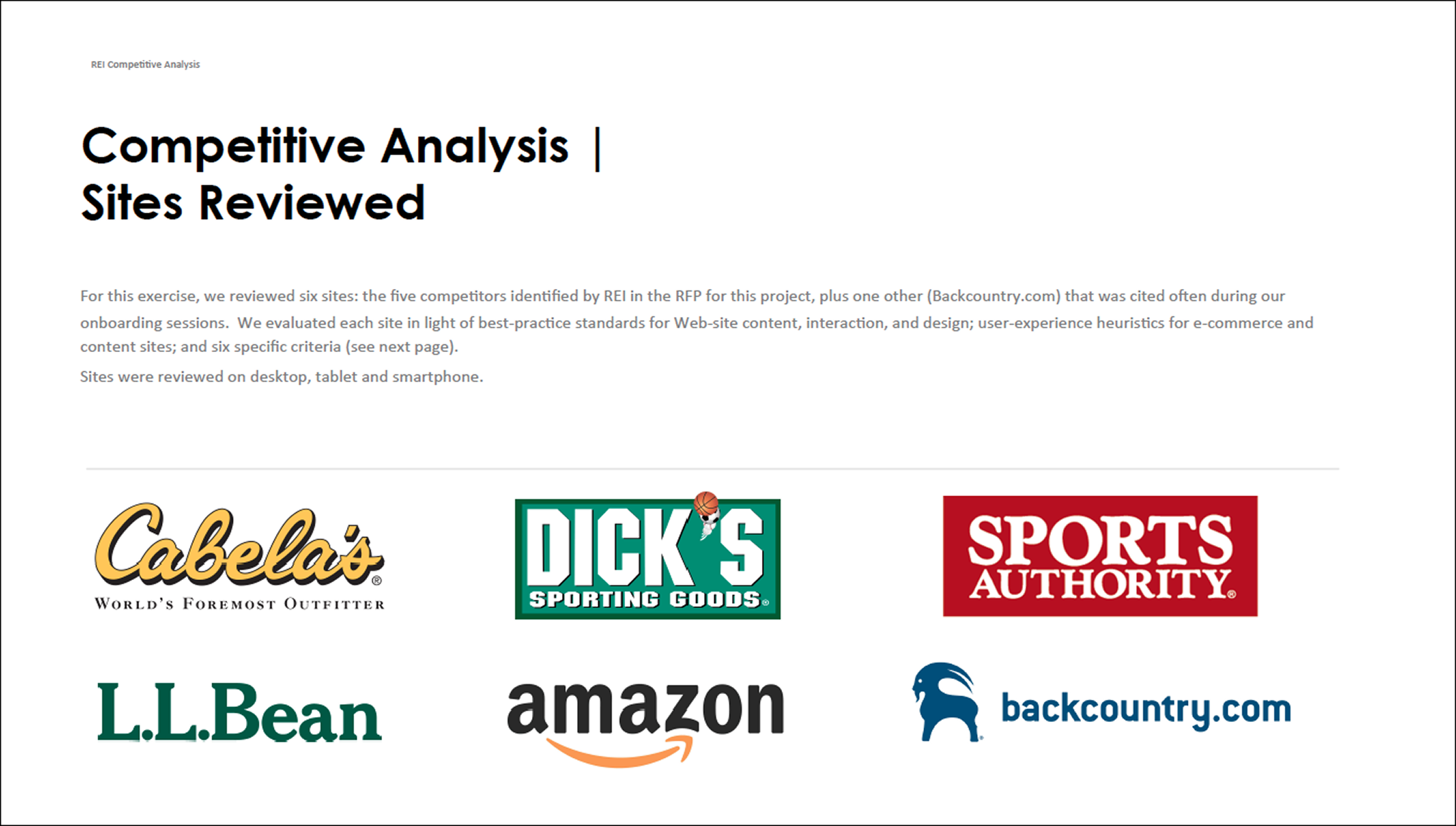
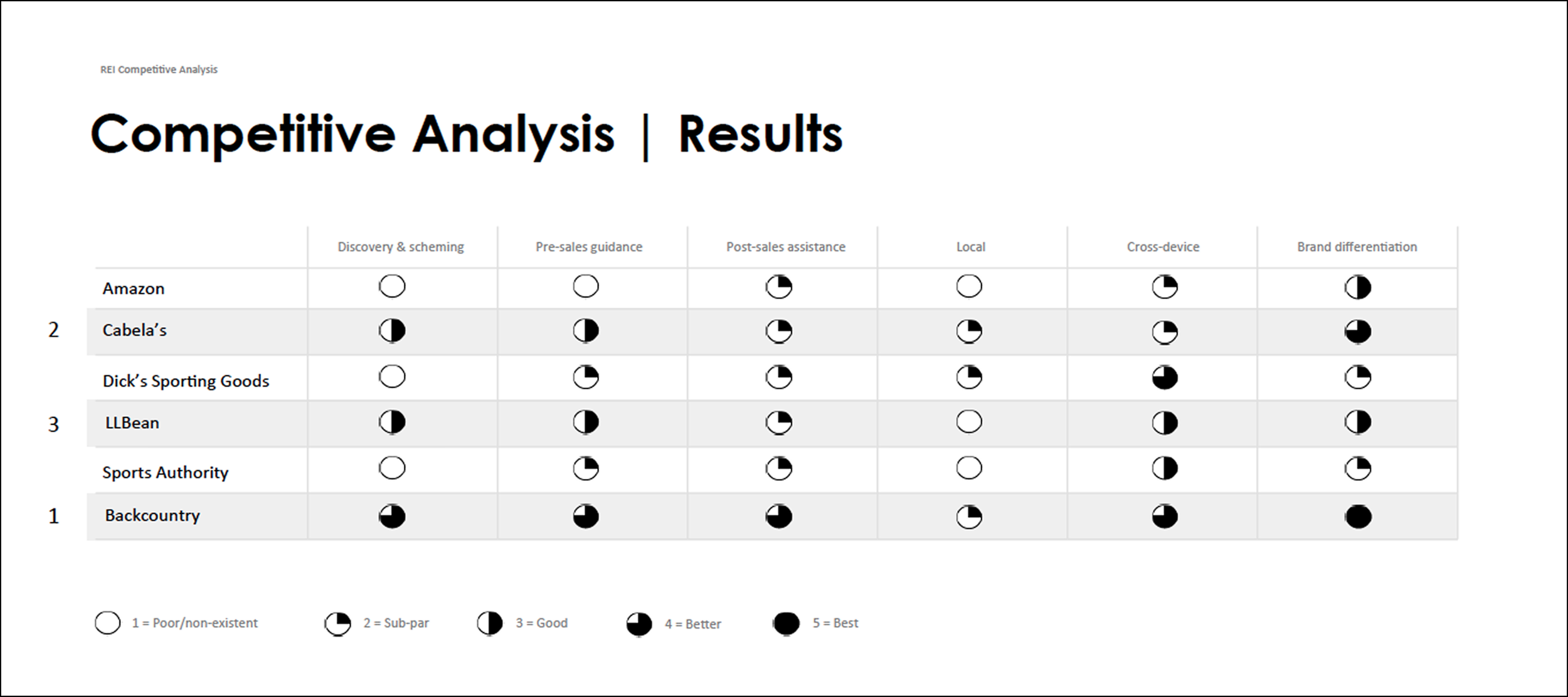
As part of the discovery process, I conducted a comprehensive audit of REI competitors ranging from large sporting goods suppliers to niche retailers: Cabela's, Dicks Sporting Goods, Backcountry, LLBean, Sports Authority and Amazon. Each site was rated on a scale of 1-5 (5-Best) for the following:
Discovery and browsing, scheming
Pre-sales guidance
Post-sales guidance
Localality
Cross device
Brand differentiation
The goal of the audit was understand the landscape and determine where REI had opportunities to excel in their customer loyalty, knowledge and product superiority.
Information Architecture
One of the more “sensitive” topics I worked on was the categories for the global navigation. Product groups will have a successful selling season succeed or fail based on their presence in the global navigation. We had multiple rounds of discussions in order to ultimately determine that the navigation (and by extension information architecture) had to support:
Core categories
Rotating seasonal categories
Additionally, categories Men, Women and Children had to be displayed as unique selections.
Design patterns
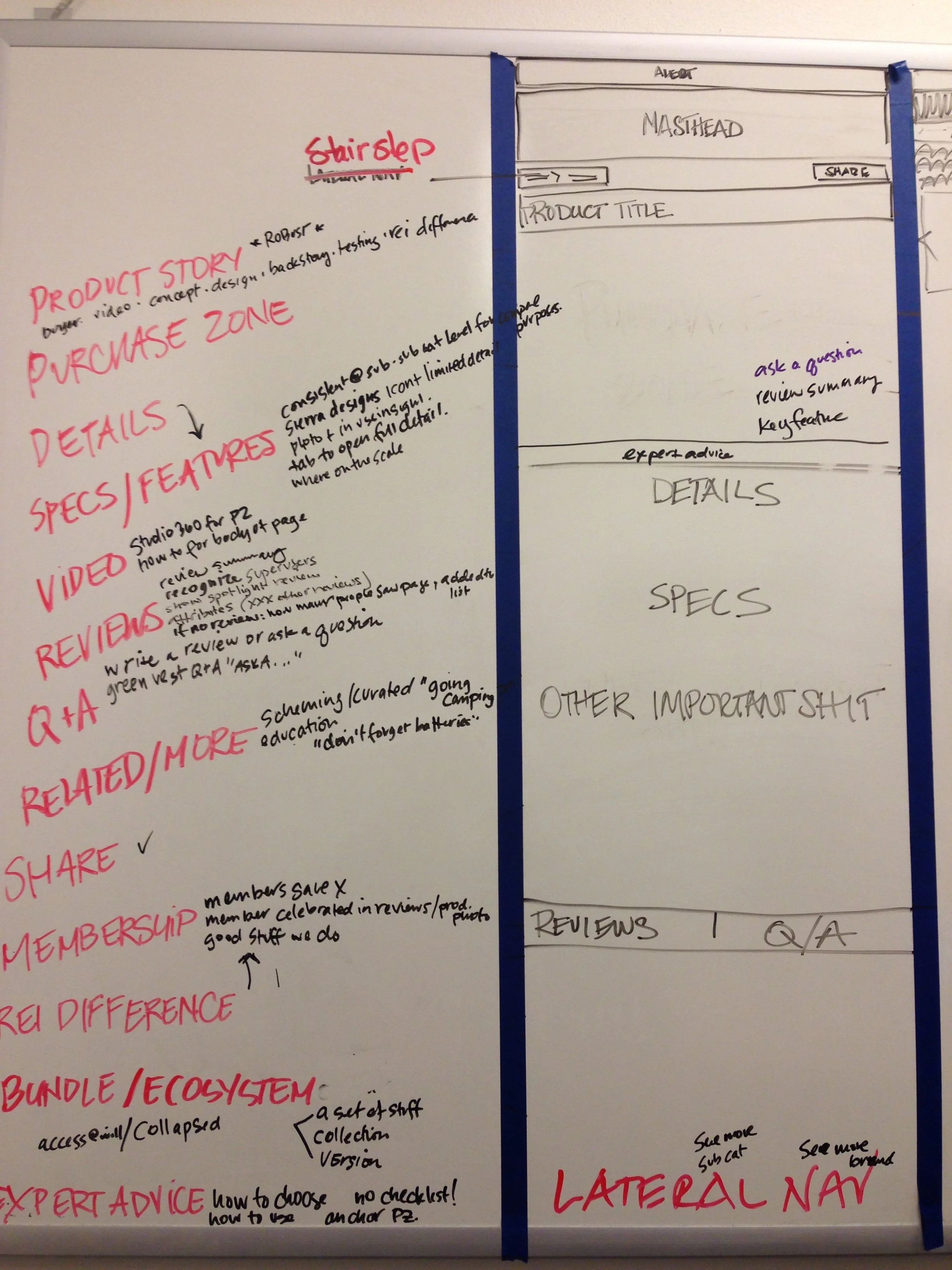
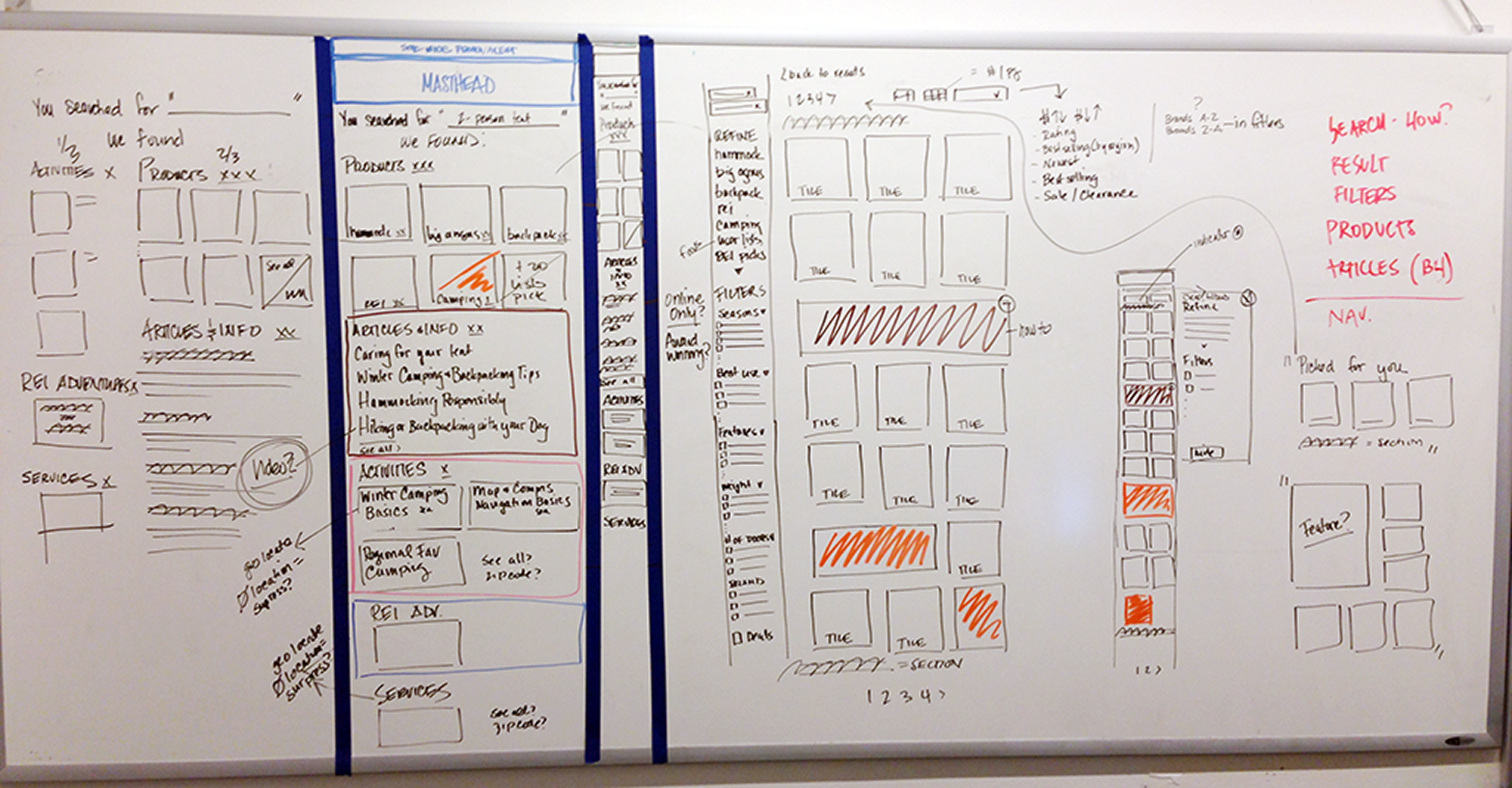
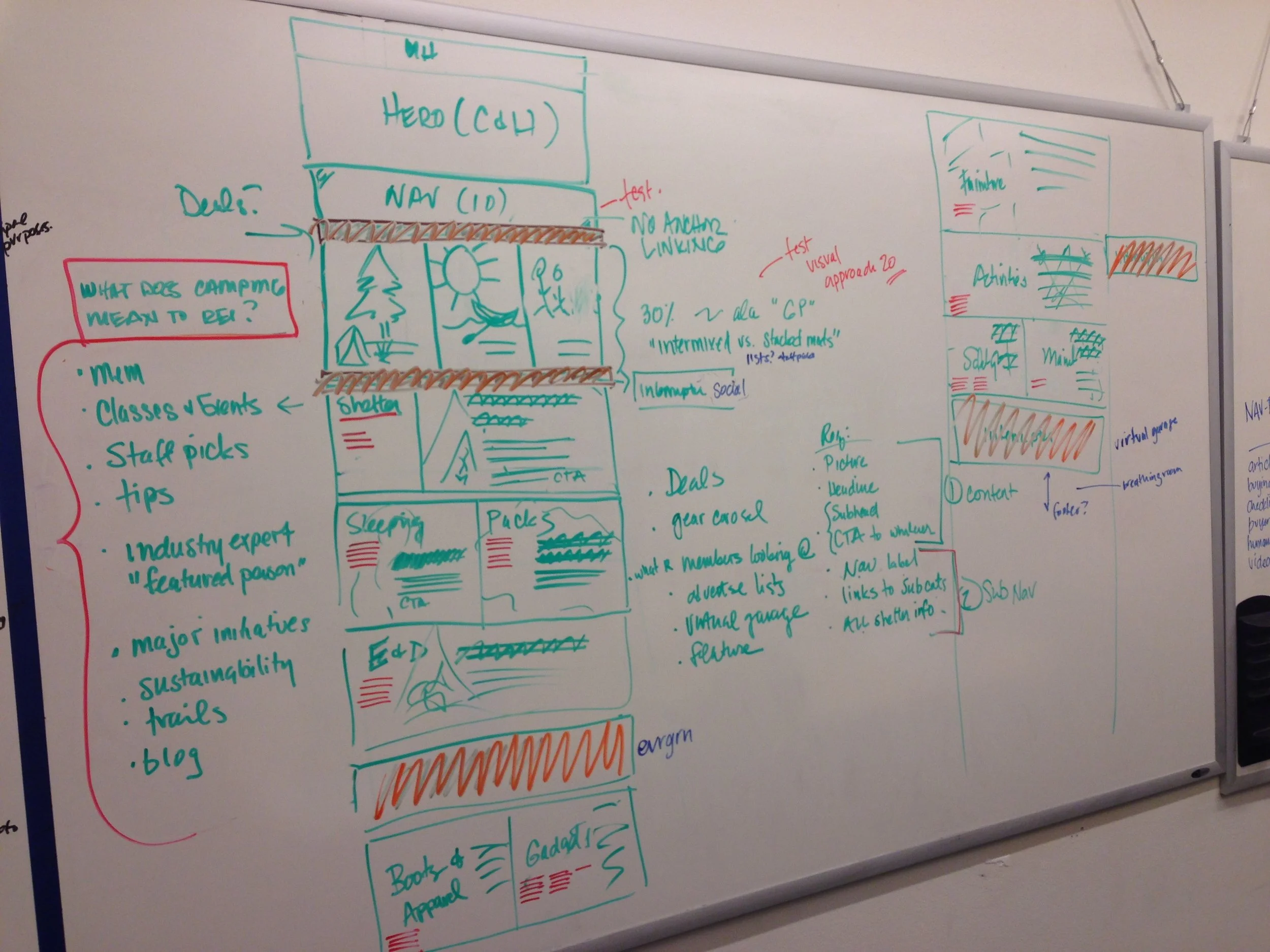
The project followed an agile approach, with design patterns developed through collaborative whiteboard sessions with REI’s UX and Content teams. Some of the whiteboards evolved into high-fidelity wireframes, and ultimately a combination of delivery-ready files and design strategy document.
Balancing expertise & product
I helped define one of my largest content strategies at the time: establishing the right balance between outdoor expertise content (e.g., “selecting a tent”) and product gear (e.g., “tents for families”) across the shopping funnel, directly informing page templates. We mapped user entry points and exposure to visualize expertise and product touchpoints across the site, ensuring journeys remained logical and flexible regardless of entry. From there, the design documentation provided tailored guidance for REI on every aspect of their site, informed by ecommerce best practices and grounded in user-centered design.
Final deliverables
The final outcome shifted from delivering a responsive website to creating a detailed e-commerce strategy and implementation guide, enabling REI to build its future e-commerce experience following the brand refresh.
Status update: 2026
The current REI experience retains much of the information architecture, content strategy, and UX/UI best practices created by the team.